Why doesn't remote work, work?
A thought on what's changed, free recording of my pricing presentation & lots of lovely links.

Since 2015, when I first went freelance, I’ve pretty much exclusively worked from home.
When I joined ScreenCloud fulltime, I continued to work from home because it worked best for me (and my needy dog-child), but I’d go into the office 1-2 days per week.
This setup, to quote Poppins, was practically perfect in every way. At home, I concentrated on deep work like writing, strategising or data analysis.
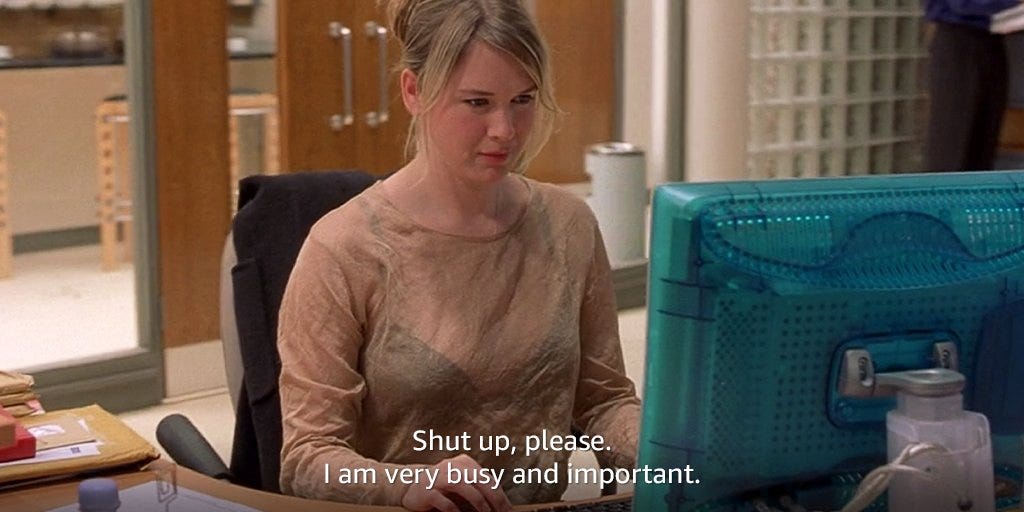
I rarely, if ever, had video calls or even audio ones. We communicated (as we always had as a distributed company) via Slack, and it was casual. There was more back and forth, but without a demand to instantly answer.
When in the office, I did 121s with my team, caught up with periphery departments like Sales & Support, and held team brainstorming sessions (plus ate a lot of pizza - our office was opposite a great, cheap pizza hall).
Then came 2020 (and a gluten intolerance - damn it).
Suddenly everyone was working from home. And yet the way we “work from home” today, looks completely different to how I spent 2015-2019 working.
In fact, productivity levels are shrinking to half what they used to be - and that’s based on pre-pandemic levels.
If you find working remotely draining today, trust me this isn’t the way it always was.
Working from home used to be a true break and a way to be more productive, not less.
So what went wrong?
“Walls of calls”
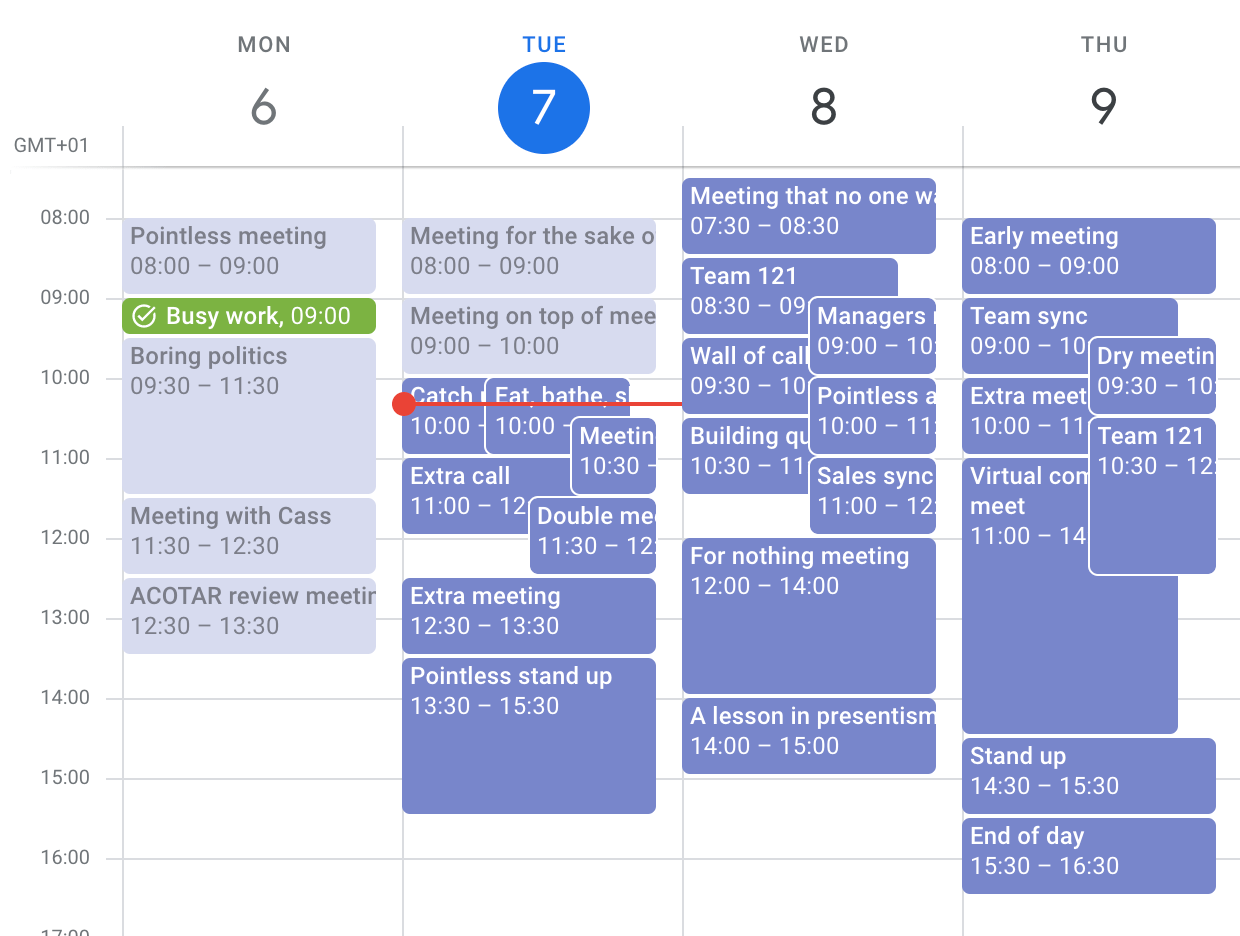
In trying to work out what is so different now, I think the common denominator is the “walls of calls” approach.
In trying to “replicate” the office environment, many companies have defaulted to booking video calls - camera on please.
While yes, sometimes you do need to get on a call, most of these calls lack agenda. The people on them have different energy levels and rarely are you able to actually get good decisions, or work, done. Instead, they fill up the calendar with a new form of pointless busy work, where just because you’re on a call doesn’t mean you’re making the best use of the time.
I’ve spoken to friends who regularly have 6-8 hours of calls per day ! It’s no surprise then, that they spend their evenings desperately trying to actually then get their work done.
Slack fear
I’ve also sensed a shift in how Slack (or any messaging service like Teams, Gchat etc.) is used.
Pre-2020 it was used as an informal way to keep in touch and send quick messages or updates. Anything “formal” such as objective-setting or briefing of new initiatives didn’t happen in Slack - most still tended to use email/Google Docs/in-person meetings.
This meant that Slack was a far more relaxed environment. You’d see people dropping in links that they’d enjoyed, a new idea they’d had on their daily walk or a quick request for help.
This, alongside having smaller rooms for teams to chat in, meant there was less pressure each time you pressed “send”.
Come 2020, in a bid to default to transparency (which I do agree is important) many companies pushed their staff to post to public rooms only.
This changed behaviour.
Suddenly, your ego would be asking “Do you really want to send that message?” each time you had a thought and most of the time, the answer would be no.
So Slack become more formal, and less useful and we didn’t find a way to mimic that casual in-the-office environment.
So what’s the answer?
I certainly don’t have all of them, but my own personal goal is to build a career that’s mostly based around deep work - the type that’s truly, deeply fulfilling.
I’m currently writing the “handbook” for a new venture I’m working on (more to come on this soon 👀) and this has led me to research the ways other companies are making remote work, work.
There seems to be one common theme:
Asynchronous communication.
Async communication is where you default to communication forms which aren’t calls (examples are shared documents, messaging channels, email etc.) so that people can dip into them when they’re not in the middle of their deep work.
To make this work, you have to have it as part of your company DNA. This takes true consideration and a want to enable deep work, as it can be really uncomfortable to move away from a default-to-calls.
The whole point of asynchronous communication is that it frees up almost all of an employee’s calendar for deep work.
As Cal Newport, author of Deep Work has famously said:
The ability to perform deep work is becoming increasingly rare at exactly the same time it is becoming increasingly valuable in our economy. As a consequence, the few who cultivate this skill, and then make it the core of their working life, will thrive.
Async communication is also far more inclusive - it means that important decisions are documented and no one is left behind because they weren’t on a call (or their dog/child/husband was barking). If more companies considered this, I think we'd see improved productivity, less burnout and more role enjoyment while working remotely.
In summary, now the knee-jerk reaction is over I think many companies will be forced to reconsider how they make remote work, work today.
Thoughts, feelings, agree, disagree? I’d love to hear from you - you can email me anytime on beth@bethgladstone.com.
Yours, with empathy,
Beth
Free recording - How to price your services
You may remember that last month I held a presentation for the Content UK community all about pricing your services as a freelancer/consultant/agency and how to get to that famous “six figure salary”.
I have to say it’s one of the presentations I’m most proud of and so I wanted to record a shorter version to share with you, which you can watch here for free! Let me know if you have any questions.

What I’ve been reading…
The wonderful team at Kepios have released a great breakdown of LinkedIn’s growth and audience in 2021. Here are some of my top pullouts:
61% of LinkedIn’s total ad audience is aged 25-34 - I definitely thought it was a Boomer channel so this surprised me!
43% of LinkedIn’s ad audience is female
LinkedIn’s ad audience has grown by 9% compared to this time last year - that’s slightly faster than Facebook (7%)
This was a great read from a fellow SaaS marketer comparing working in a startup to The Sopranos
4 day workweeks can’t work without deep work - another great take on the above 😉 plus a great overview of how Wildbit actually implement this
How Facebook, Twitter, and YouTube are handling the Taliban - very timely and shows the global politics pressures social media behemoths face
For fun…
Bill Gates trying to explain “the internet” in 1995 (click-through to watch)

Thank you for reading ❤️
I know many of you already follow me on Instagram but if you don’t, that’s where I post most frequently with breakdowns of new content/social media reports, SEO tips and behind the scenes of business & life!